WASHINGTON, Sept 22: The American television networks are boycotting President
Donald Trump and have approached the court for remedy under the First Amendment
over his ban on certain outlets from White House grounds. And Trump reacted
by launching his own TV, Trump TV, immediately.
The boycott actually began on Monday when the White House refused to let CNN
act as the pool representative even as on Friday Trump had already officially
announced the ban on three outlets CNN, MS NOW and Politico accusing them of
reporting "fiction and lies," on Truth Social.
On Saturday, Secret Service agents had turned away reporters from the three
networks at the gates and confiscated their White House badges.
As the boycott began on Monday, the networks also approached a Federal court
to get the ban removed.
The coverage of the President is not shut down completely. Only the press pool—ABC,
CBS, CNN, Fox News and NBC—is boycotting. And Trump's ban is on CNN, MS NOW
and Politico.
But that coverage by the rest all is impaired because: The press pool of television
networks comprising the five big ones—ABC, CBS, CNN, Fox News and NBC—maintain
the massive physical infrastructure and satellite capabilities at the White
House to broadcast live, high-definition feeds and since the equipments are
shut, sharing of coverage by others suffers from technical inadequacies.
How did Trump react to the boycott
And in response to the boycott, the White House immediately launched its own
24/7 online streaming feed called "Trump TV" to broadcast official events and
announcements, past speeches and military exercises.
The inaugural video (embedded above) shows a ribbon-cutting ceremony filmed
entirely by Trump's political team. The press pool usually provides for all
the primary audio equipment and broadcasting feeds and since they are boycotting
the White House, the footage here also lacks traditional broadcast audio.
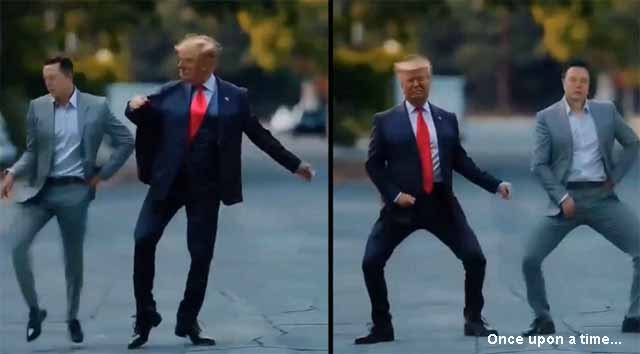
The video is not an AI deepfake or a digital scam; it is an unedited recording
of a highly unusual, real-time political event.
Trump-Mamdani press briefing
Later, in the evening, at an event with New York Mayor Zohran Mamdani, he defended
his ban on CNN, Politico and MS Now and mocked the network boycott. (He was
on way to the UN; there also he took on the CNN correspondent.)
Trump said: "I was not very worried about that. I think these outlets have
an obligation to be fair. If they are fake news I think I have an obligation
to not allow them."
Trump did take questions from reporters assembled on the sprawling lawn that
wraps around Gracie Mansion, the official residence of New York City Mayor—a
thoughtful landscape. Trump kept the session going, in fact. Both fielded a
handful of press questions. One even asked Trump if his media restrictions were
meant to distract from high gas prices.
The Gracie Mansion event became a fascinating case study for the media. Earlier
that afternoon, Trump's first event without the official network press pool
(a White House helipad appearance) suffered from terrible audio and sparse coverage
because network cameras weren't there. However, because the New York City event
was hosted locally by Mamdani, reporters from the banned outlets—as well as
countless local and independent journalists—were able to attend and ask questions
freely. Although Trump had expressed reservations on the issue of ban to Mamdani,
he was happy meeting the press, at a different place.
A Presidential visit to Gracie Mansion is a very rare event. It was their third
meeting—a meeting of two polar-opposites, one an astute conservative Republican
and other a democratic socialist. The leaders displayed an unlikely "bromance".
A 'flexible' Trump was friendly and dynamic, praising Mamdani as a great mayor.
Reporters from the banned outlets (CNN, Politico, and MS NOW) as well as the
boycotting press pool television networks did attend and cover the event at
Gracie Mansion.
How the broader press corps and the pool system operate
(Media organisations share materials to save on costs when broadcasting Trump
events—and that is the press pool: television networks making up the White House
press pool are ABC, CBS, CNN, Fox News and NBC.)
Other journalists outside the five major television networks continue to attend
and cover White House events. The collective boycott applies strictly to the
television press pool.
These hundreds of other journalists from different media outlets come to the
White House every day, but they do so under a two-tier system that separates
general press access from the specialized press pool.
The White House press corps operates under a multi-tier structure. So coverage
of the President does not shut down completely.
Only ABC, CBS, CNN, Fox News, and NBC maintain the massive physical infrastructure
and satellite capabilities at the White House to broadcast a live, high-definition
feed.
Print and radio pools have dozens of rotating participants, while the television
pool is a distinct, expensive operation.
The White House press pool exists because small spaces like the Oval Office,
Air Force One or a presidential limousine cannot physically fit hundreds of
reporters.
A tiny, rotating group of about 20 journalists (representing print, radio,
still photography, and video) is chosen to act as the eyes and ears for the
entire press corps. The on-duty pool reporters take detailed notes, audio, and
video, and are required by tradition to share that footage and data with all
other media outlets, even their direct competitors.
The James S Brady Press Briefing Room has 49 assigned seats, and many other
reporters stand along the sides. Dozens of outlets outside the major TV networks
have permanent or daily credentials to be on the White House grounds. These
include: print outlets; wire services and radio; niche and foreign media.
The print and radio pools are kept working. Certain print media continue to
shadow Trump and distribute text dispatches about his activities. The New York
Times and The Washington Post announced they would withhold or delay sharing
still photographs of presidential events.
Meanwhile, second-tier and alternative broadcasters have stepped in. The White
House bypasses the boycotting networks by utilising their infrastructures.
Outlets like Newsmax and independent conservative online streamers continue
filming on the White House grounds. But it was technically flawed—such as Trump's
South Lawn helipad speech being broadcast with completely inaudible audio over
the roar of Marine One.
Trump had the last laugh, at Mamdani's he pointed at the massive crowd and
boasted that the press "never boycott me."






 )